Centrist Policy Positions and Politicians Worth Supporting
Author: Centrist Independent Voter, PAC
The Centrist Independent Voter Political Action Committee, Inc., also known as CIVPAC, was formally established in 2022. Its predecessor organization was founded in 2011 as the New Independent Party. CIVPAC is a nonprofit political action committee focused on moving the existing political parties toward the political center. CIVPAC’s purpose is twofold: first, to promote centrist solutions to difficult public policy problems; and second, to support moderate candidates, including Democrats, Republicans, and independents. CIVPAC’s logo is adapted from Francisco Goya’s The Sleep of Reason. The inscription in the image reads, “The Sleep of Reason Produces Monsters.”
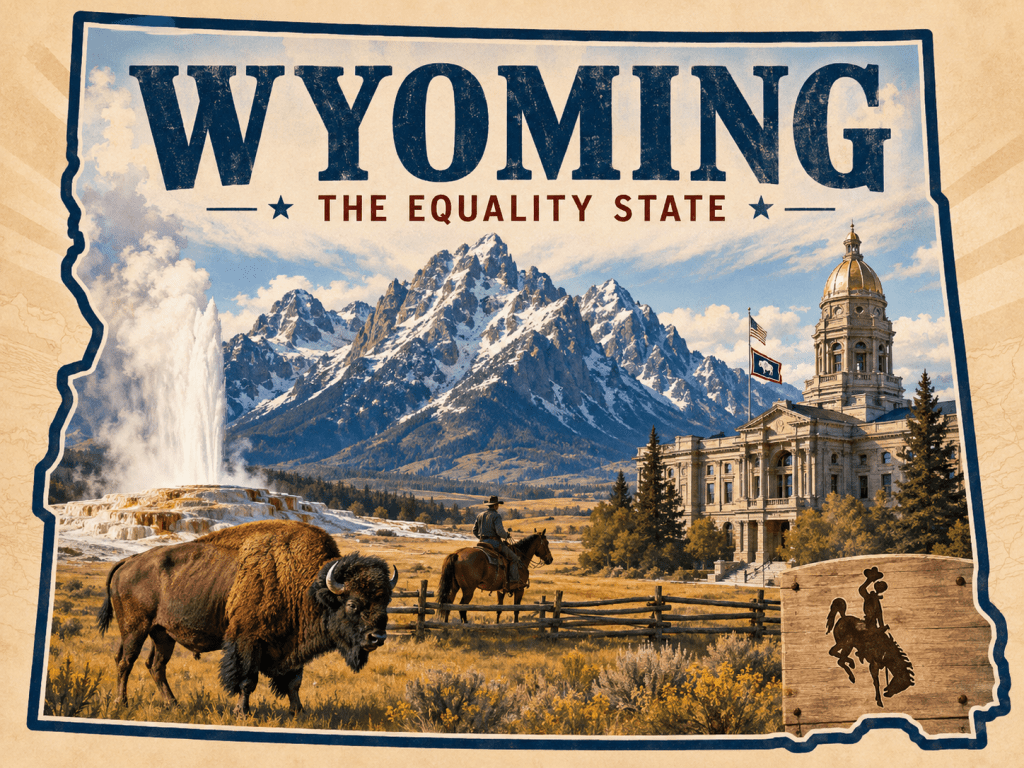
Centrist Independent Voter has endorsed Lisa Kinney in Wyoming’s August 18 Democratic primary for the U.S. House of Representatives.
Kinney served ten years in the Wyoming Senate, including two years as minority leader. What most distinguishes her for us is her record of working across party lines and her explicit interest in finding a small group of moderate members of Congress who can cooperate and exercise meaningful influence.
We do not agree with Kinney on everything. We have reservations about some of her tax proposals, and we have not found a clear statement from her on continued American assistance to Ukraine. Her explicit support for NATO is reassuring, but voters should watch for further clarification on Ukraine and related foreign-policy questions before the primary.
Those reservations do not outweigh her experience, independence and demonstrated willingness to work with Republicans. In a Congress increasingly organized around partisan loyalty, those qualities deserve support.
Wyoming voters now have CIVPAC-endorsed candidates in both House primaries: Lisa Kinney in the Democratic primary and Kevin Christensen in the Republican primary.
Centrist Independent Voter has endorsed Sam Mead in Wyoming’s August 18 Republican primary for the United States Senate.
Mead is challenging Representative Harriet Hageman, who entered Congress after defeating Liz Cheney in 2022. There is a certain symmetry to the race: Cheney delivered her concession speech that year from the Mead family ranch.
But our endorsement is not about relitigating that election.
It is about whether Republican senators should exercise independent judgment or regard loyalty to Donald Trump as part of their job description.
Mead has said senators should judge presidential nominees on competence, character and ethics rather than partisan loyalty. He has defended Congress’s constitutional authority over war, criticized deficit spending, supported secure borders combined with legal immigration reform, and opposed wholesale disposal of Wyoming’s public lands.
We have reservations. Mead needs to provide much more detail on Ukraine, NATO, China and federal fiscal policy.
But he offers something increasingly scarce in Republican politics: a willingness to tell a president of his own party no.
Four years after Hageman defeated Cheney, Wyoming Republicans have an opportunity to send a different kind of conservative to Washington.
Centrist Independent Voter has endorsed Eric Barlow in Wyoming’s August 18 Republican primary for governor.
Barlow is a conservative Republican, and we disagree with him on important issues, particularly abortion. He supported Wyoming’s near-total abortion prohibition and its ban on medication abortion in 2023.
But primary elections require voters to choose among the candidates actually running. In this field, Barlow offers the strongest combination of governing experience, institutional temperament and practical conservatism.
A veterinarian, rancher, Marine veteran and former speaker of the Wyoming House, Barlow has emphasized health care, water, public lands, education, economic opportunity and the future of Wyoming’s smaller communities. His energy policy is notably pragmatic: he supports the state’s traditional industries while remaining open to nuclear power and other sources, arguing that growing electricity demand means “every electron matters.”
Barlow has also resisted the factional politics that increasingly dominate the Wyoming Republican Party. His principal opponent, state Superintendent Megan Degenfelder, has built much of her campaign around President Trump’s endorsement and alignment with his political movement.
We still have unanswered questions about Barlow’s views on the 2020 election, Trump’s efforts to overturn it and the proper limits of presidential power. Voters should continue looking for clear answers before casting their ballots.
On balance, however, Barlow offers Wyoming Republicans the better choice: experienced, serious and more interested in governing than ideological performance.
Centrist Independent Voter has endorsed Jim Priest in Oklahoma’s August 25 Democratic runoff for the United States Senate.
Priest is a long-shot candidate in a strongly Republican state, but that does not make the Democratic choice unimportant. His background as a lawyer, nonprofit executive and minister is accompanied by an unusually explicit commitment to working with practical problem-solvers in both parties.
We particularly agree with Priest’s criticism of tariffs. Tariffs are largely paid by American consumers and businesses, and unpredictable trade policy raises costs for farmers and other producers. Priest also argues that Congress should reclaim its constitutional authority over trade.
His foreign-policy program needs more detail, and his domestic proposals need a clearer accounting of their costs. Those are real reservations.
But Priest offers a more practical approach than runoff opponent N’Kiyla Jasmine Thomas, who has made removing President Trump within her first 100 days a central campaign promise. Centrist Independent Voter has serious objections to Trump and could support impeachment when justified by the evidence. A Senate candidate, however, should recognize that impeachment begins in the House and that conviction requires a two-thirds Senate vote. Opposition to a president is not a substitute for a governing program.
Priest’s combination of bipartisan instincts, institutional responsibility and economic realism makes him the stronger choice.
Centrist Independent Voter has made its first endorsement of the 2026 general election, endorsing Senator Jon Ossoff for reelection to the United States Senate from Georgia.
This endorsement goes beyond ordinary disagreements over taxes, spending and social policy. During President Trump’s second term, Congress has repeatedly failed to defend its own constitutional responsibilities—from presidential appointments and war powers to tariffs and oversight of the executive branch.
Ossoff has demonstrated a willingness to resist those abuses. He opposed a series of deeply problematic Trump nominees, supported congressional limits on unilateral tariffs and unauthorized war, and has consistently supported Ukraine and America’s alliances.
Just as importantly, his independence is not entirely partisan. Ossoff has broken with Democrats on immigration enforcement and rejected several proposals associated with the party’s left wing, including Medicare for All, the Green New Deal, defunding the police and expansion of the Supreme Court.
Republican nominee Mike Collins has bipartisan legislative accomplishments that deserve recognition. But his votes on Ukraine, war powers and tariffs—and his own description of his role as helping Congress “have President Trump’s back”—raise serious doubts about the institutional independence required of a United States senator.
Centrist Independent Voter has endorsed Representative María Elvira Salazar in the August 18 Republican primary for Florida’s 27th Congressional District.
CIVPAC disagrees with Salazar on several important issues, including abortion, President Trump and parts of Republican economic policy. But her work on the bipartisan Dignity Act demonstrates a willingness to confront a difficult national problem with detailed, politically realistic legislation.
Working with Democratic Representative Veronica Escobar, Salazar has advanced an immigration proposal combining stronger border enforcement and employment verification with legal status for qualifying long-term undocumented residents. She has also defended that approach despite criticism from within her own party.
Her opponent, V. Michael Arias, presents a serious and generally reasonable agenda, but Salazar has the stronger demonstrated record of bipartisan legislating.
CIVPAC has added four endorsements in the August 18 primaries in Alaska, Florida and Wyoming. We have also updated and reaffirmed our endorsement in today’s Democratic Senate primary in Michigan.
Alex Vindman for the U.S. Senate in Florida
CIVPAC endorses retired Army Lieutenant Colonel Alex Vindman in Florida’s Democratic Senate primary.
Vindman brings national-security expertise, personal courage and a demonstrated commitment to constitutional government. His willingness to report Donald Trump’s effort to pressure Ukraine—despite the predictable risk to his military career—provides unusually strong evidence that he would place his constitutional obligations ahead of partisan loyalty.
CIVPAC endorses former Representative David Jolly in Florida’s Democratic gubernatorial primary.
Jolly offers governing experience, political pragmatism and the ability to appeal to Democrats, independents and former Republicans. Although we disagree with several parts of his platform, he presents a credible alternative to both Florida’s right-wing political establishment and a mirror-image politics of the left.
CIVPAC endorses retired Army Colonel Kevin Christensen in Wyoming’s Republican primary for the state’s open at-large House seat.
Christensen combines military and public-land-management experience with fiscal seriousness, respect for congressional authority and an explicit rejection of MAGA politics. He offers Wyoming voters a traditional conservative alternative to candidates who define Republican loyalty primarily as loyalty to Donald Trump.
CIVPAC endorses former Representative Mary Peltola in Alaska’s nonpartisan Senate primary.
Peltola has demonstrated political independence, bipartisan credibility and a willingness to place Alaska’s economic and regional interests ahead of national Democratic orthodoxy. Her support for Ukraine, responsible energy development and democratic institutions makes her an unusually strong Democratic Senate candidate.
CIVPAC has also updated and reaffirmed its endorsement of Representative Haley Stevens in today’s Michigan Democratic Senate primary.
Mallory McMorrow’s withdrawal leaves voters with a direct choice between Stevens and Abdul El-Sayed. Stevens offers greater federal experience, stronger support for Ukraine, a more responsible position on Israel and better prospects of holding this closely contested seat in November.
These candidates are not identical, and CIVPAC does not agree with any of them on every issue. Each nevertheless offers the strongest available combination of competence, political independence, institutional responsibility and ability to govern beyond a partisan base.
CIVPAC has endorsed former Governor Mark Sanford in South Carolina’s August 11 special Republican primary for the United States Senate.
Sanford is not a conventional centrist, and CIVPAC has important disagreements with him—particularly on abortion. But he offers qualities that have become increasingly rare in the Republican Party: genuine concern about federal debt, support for competitive markets and free trade, respect for constitutional limits and demonstrated independence from Donald Trump.
Sanford opposed Trump’s tariffs, challenged the party’s growing reliance on presidential loyalty and lost his congressional seat after publicly criticizing Trump. His record gives us reason to believe that he would approach the Senate as a member of an independent branch of government rather than as an automatic vote for the president.
He has made serious personal and political mistakes. South Carolina voters have previously considered those failures and returned him to public office. We believe his experience, fiscal seriousness and political courage make him the strongest candidate in the Republican field.
CIVPAC has endorsed Aly Richards in Vermont’s August 11 Democratic primary for governor.
Richards is the more practical and responsible choice over economist Amanda Janoo. Although CIVPAC disagrees with Richards on the appropriate size and role of state government, she has demonstrated an ability to build coalitions, turn policy goals into workable legislation and confront the costs and practical limitations of government programs.
The contrast is particularly clear on health care. Both candidates support government-guaranteed universal primary care, but Janoo proposes a substantially more expensive state-funded system supported by large income-tax surcharges. Richards has rejected that approach as economically and politically unrealistic and has emphasized preserving federal and insurance funding rather than shifting the full cost to Vermont taxpayers.
Richards also offers a more practical approach to Vermont’s housing shortage, workforce problems and stagnant population. Her emphasis on increasing housing construction, improving administration and adopting policies that can actually pass the legislature makes her the stronger Democratic nominee.
This endorsement applies only to the Democratic primary. CIVPAC will evaluate the general election separately after voters choose a nominee to face Republican Governor Phil Scott.
CIVPAC has endorsed Maurice Mercer in the August 11 Democratic primary for Alabama’s 6th Congressional District.
Mercer is a former Pelham City Council president with experience in business, small-business ownership and local government. His platform combines support for competitive markets and reduced unnecessary regulation with secure borders, humane immigration reform, accountable law enforcement and respect for religious freedom.
He is an unusually strong fit for CIVPAC. Rather than treating corporations, profits or law-enforcement officers as presumptive enemies, Mercer emphasizes competition, opportunity, constitutional rights and practical cooperation among government, business, workers and local communities.
Alabama’s 6th District is heavily Republican, and Mercer would face a difficult general election. That is not a reason to ignore his candidacy. Political organizations should help elevate thoughtful centrists even when their path to victory is narrow. Candidates such as Mercer can broaden their parties, improve political debate and offer voters a meaningful alternative to both right-wing and left-wing politics.